INTERVIEW AVEC BLEECH 9:3 : « Je pense que les morceaux et le groupe ont comme évolué autour de la poursuite de cet objectif. Et tout ce travail qui va avec, ça ne fait qu’alimenter la musique. »
*ENGLISH DOWN BELOW*
En pleine ascension avec leur grunge alternatif tout droit venu d’Irlande, Bleech 9:3 enchaine les salles de concert et festivals. EP encore chaud en poche, c’est entre deux bouchées et le soundcheck, au coeur de This Is Not A Love Song que Bleech 9:3 nous ont généreusement accordé quelques minutes pour parler de leurs débuts, Londres et de leurs premiers titres parus chez Polydor.
Opus : Encore toutes nos félicitations pour cet EP ! Qu’est ce que ça fait de le savoir enfin sorti ?
James : Ça fait du bien. C’est vraiment génial. C’est chouette de pouvoir enfin sortir ces morceaux et d’avoir ce sentiment de pouvoir avancer vers de nouvelles choses. Et d’un autre côté ce sont des morceaux que nous avons bouclés il y a un bon moment de ça, et de les voir enfin exister pour le public, c’est quelque chose de particulièrement fort.
Luke: Oui, ça fait clairement du bien oui. Ce sont des titres que nous avons beaucoup joués en live aussi, donc je pense qu’il y avait une certaine attente autour de cette sortie. Et une fois sortis, tu sens que c’est digéré et que tu peux passer à la suite. Et c’est excitant parce que ça ne veut pas dire qu’on les oublie pour autant, mais qu’on peut aller de l’avant, se projeter vers de nouveaux projets qui nous enthousiasment pour le futur.
Opus : Comme une façon de faire de la place pour la suite ?
Luke : Oui, je pense oui parce qu’on évolue sans cesse et surtout qu’au vu du nombre de concerts que nous avons donnés cette année, on peut facilement se sentir étouffés si on joue tout le temps les mêmes morceaux.
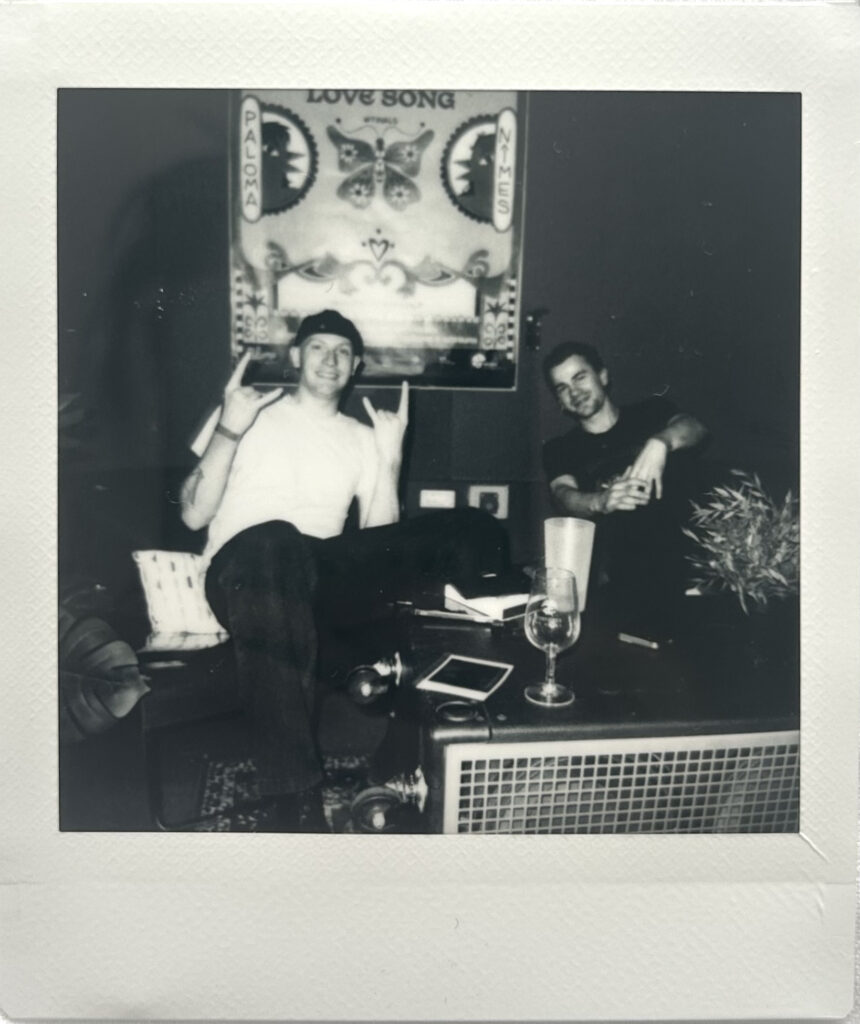
Opus : J’aimerai parler un peu du processus créatif. Est ce que vous avez des choses en particulier à nous partager, peut être les quelques inspirations derrière cet EP et comment vous vous êtes retrouvés à en discuter ensemble ?
James : Alors parmi les quelques premières chansons que nous avons écrites ensemble il y a Cannonball, que Baz (chant et guitare) et Sam (guitare) ont commencé à écrire ensemble avant que Bleech 9:3 ne se forme et c’est une des premières chansons qui a vu le jour. Et puis, quand elle a été intégrée au groupe, je pense que pour moi – et peut-être pour nous tous – cette chanson est en quelque sorte devenue une ligne directrice pour le groupe. Puis d’autres morceaux ont fini par voir le jour, comme « Underrated », qu’on a écrite à Dublin, avant de déménager à Londres. Et puis, depuis la création du groupe et l’écriture de ces morceaux, on en a écrit tout un tas d’autres et on a joué plein de choses en concert. Les cinq titres qui constituent l’EP aujourd’hui, c’est en quelque sorte… je dirais que ce sont ceux qui nous représentent le plus.
Opus : Tu as mentionné Cannonball, est ce que tu dirais que ça a été un tournant ? Une fois l’enregistrement bouclé, est ce que vous vous êtes regardés en mode “oh, ça c’est Bleech 9:3” ?
James : Oui– c’était vraiment… Quand on s’est retrouvés tous ensemble dans le studio, le son était– c’était juste quelque chose qu’on allait suivre.
Luke : Oui, je suis d’accord avec James. C’était l’une des premières choses — peut-être qu’on l’a vue comme une bonne esquisse de ce que pourrait devenir le groupe dans le futur. On explore clairement le côté plus heavy, mais je pense que parfois on cherche à voir comment on peut le maîtriser ou le présenter différemment par la suite. On adorait l’agressivité de ce morceau, mais c’était vraiment un moment où on a pu comprendre ce que c’était, et savoir comment on pourrait écrire d’autres chansons dans ce style là.
Opus : Construire un tel projet prend en général pas mal de temps avant que les choses se concrétisent vraiment. En repensant à vos premiers mois à Londres, comment avez-vous réussi à jongler entre ce qui vous permettait de payer les factures et ce que vous êtes vraiment et à continuer d’évoluer en tant qu’artistes ?
Luke : Ouais, c’est clairement une situation à laquelle on a dû faire face. On avait tous des boulots. J’étais chef cuisinier par exemple. Je pense qu’on savait que d’une manière ou d’une autre nous devions payer les factures, mais on utilisait clairement chaque jour de libre. Et si on avait des journées à demi service sur lesquelles on pouvait caser des moments pour se retrouver et jouer ensemble, parce que tout ça n’avait qu’une seule raison d’être : on ne faisait nos boulots que pour permettre autre chose. C’était juste un tremplin en fait, et on a la chance aujourd’hui d’avoir le temps d’écrire à plein temps, ce qui est incroyable. Et on a tourné en Europe avec des groupes vraiment cools. Et ouais, ça a pris une tournure assez différente ces derniers mois, et je crois que c’est ce qu’on a toujours voulu.
James : Oui, je dirais que – quand on a déménagé à Londres, c’était pour le groupe. Alors forcément il faut bien vivre et bosser. Il faut pouvoir faire ses courses tout ça. Luke travaillait super dur. Et nous tous d’ailleurs. Sam bossait dans un magasin de guitares. Et, tu sais, les premières semaines, on essayait de trouver un boulot… mais après il y avait toujours… toujours ce truc de… qu’il pleuve ou qu’il vente, être en studio ou partout où on pouvait pour composer et passer le plus de temps possible ensemble. En se disant toujours– on est arrivés jusqu’ici, comment est-ce qu’on fait pour que ça marche ? Autant donner tout ce qu’on peut tu vois? Et puis je pense que les morceaux et le groupe et ce que sont devenus ces morceaux aujourd’hui ont comme évolué autours de cette sorte de besoin… autour de la poursuite de cet objectif. Et tout ce travail qui va avec, ça ne fait qu’alimenter la musique, tu vois ?
Opus : Est ce que vous auriez quelque chose à dire à quelqu’un qui traverse la même chose en ce moment, quelqu’un qui essaye de se faire sa place dans le milieu mais qui n’a pas forcément encore les bons contacts ni de filet de sécurité ?
James : Je lui dirais d’écrire autant qu’il peut. D’écrire sans cesse et de ne pas avoir peur de tenter de nouvelles choses. Et si quelque chose ne marche pas, nous on a clairement constaté que si on galérait avec une chanson, on s’y attelait et essayait différentes approches pour la mener à bien. Et je pense que pour ce qui est de l’industrie, parfois il faut juste foncer et aller frapper aux portes, se pointer aux concerts et accoster les gens. N’aie pas peur de demander. Voilà, n’aie pas peur de te mettre en avant je suppose. Baz et Sam ont une anecdote marrante à ce sujet : Lorsqu’ils sont arrivés à Londres, ils sont allés à un concert et étaient là “oh il y a ce gars qui va être à ce concert, coinçons le !” Limite façon stalker un peu. Mais il faut savoir se mettre sur le chemin de ce qu’on veut.
Opus : *rires* Du moment que c’est fait avec politesse !
James : Oh non oui bien-sûr ! *rires* Si t’es pas poli, ils se souviendront bien de toi également. Ils seront là “ce mec est un–” *rires*
Luke : Ouais, un peu pareil pour moi. C’est drôle parce qu’il s’agit d’une très bonne question, mais on a pas toujours l’impression d’être en mesure de donner des conseils, en fait. Mais en même temps, je pense que si on repense à notre propre parcours, nous n’avions pas vraiment les réponses non plus, mais il s’agit d’un effort perpétuel pour chasser ce que tu veux et ne pas prendre crainte si quelque chose ne le fait pas pour toi ou si ce ne sont pas les bonnes personnes, il ne faut pas avoir peur de changer parce que sinon ça ne bougera pas tout seul. Puis je pense que c’est pour ça que c’est vraiment cool qu’on se soit retrouvés ensemble, parce qu’on est comme des frères. Il y a quelque chose de spécial là-dedans, et quand tu fais de la musique avec ce genre de personnes, c’est différent, tu vois ? Ce ne sont pas juste des collègues. C’est autre chose. Tu peux comprendre la vision de chacun sur le groupe d’une manière différente.
Opus : Parlons un peu de vos shows. Cette question est peut être un peu subjective mais vous avez fait la tournée des salles au Royaume Uni et en Europe récemment, et en tant que française j’ai l’impression qu’en Europe on est assez réceptifs au post-punk et grunge et je me demandais si c’était quelque chose que vous ressentiez aussi ? Est-ce que pour vous, l’Europe et le Royaume Uni sont un bon terrain de jeu ? Que le public est prêt à vous écouter, et à vous porter dans votre évolution ?
James : Ouais, complètement. Je pense que c’est clairement l’expérience qu’on a eue au Royaume-Uni, parce qu’on y est basés maintenant, évidemment, et aussi chez nous en Irlande. Il y a tellement de groupes géniaux, et je pense que la musique guitare, ce genre de truc post-punk et grunge, il y a une vraie soif pour ça .On l’a clairement ressenti au Royaume-Uni, et puis ces dernières semaines et ces derniers mois, en jouant en Europe, on a clairement eu une réponse assez similaire. Il y a eu quelques concerts où on s’est dit : « oh, ils nous aiment pas ici.” Mais là, il faut juste être à la hauteur. Non, mais oui, je suis tout à fait d’accord.
Luke : Oui, il y a clairement un renouveau. Je crois qu’on n’a jamais vraiment cherché à se concentrer là-dessus en écrivant. On est tous inspirés par différents groupes, chacun à sa façon. Mais ouais, comme James l’a dit, il y aura toujours des gens qui n’accrocheront pas, mais c’est la vie. Y’a des gens qui n’aiment pas Oasis. Moi-même, je n’aimais pas jusqu’à l’année dernière.
Opus : Moi non plus !! *Marie n’aime toujours pas*
James : En tout cas c’est génial d’être en Europe et ici aujourd’hui en France, parce que c’est juste une nouvelle occasion pour nous d’aller faire découvrir notre musique au public. Et même s’il y a une seule personne dans la foule qui se dit « OK, on s’en va », ça représente déjà tout pour nous.
C’est sans surprise — et sans mauvais jeu de mots avec leur titre du même nom — qu’ on a adoré leur concert. Entre notre appareil photo qui crépitait sans relâche et nos propres pas dans la foule, on a eu le plaisir de vivre ce concert des deux côtés à la fois. On ne perdra pas une miette de ce que cette ascension leur réserve. Le rendez-vous est pris le 11 septembre à Paris, au Supersonic, une date déjà complète, mais que les plus déterminés d’entre vous pourront toujours tenter d’arracher à la revente.
Retrouvez toutes nos photos de cette soirée au This Is Not A Love Song ici
Suivez Bleech 9:3 sur Instagram et Youtube !
Interview par Marie Jane FORT et Zoé MATHIEU / Traduction par Marie Jane FORT
INTERVIEW WITH BLEECH 9:3 : « I think the songs and the band and what the songs are now kind of evolved around that kind of… that needing to…well, that pursuing that goal. »
Riding high on their Irish-bred alt-grunge sound, Bleech 9:3 have been tearing through venues and festivals all year long, EP still warm in their back pocket. Caught between a quick bite and soundcheck at This Is Not A Love Song, the band kindly carved out a few minutes to chat about their early days, London, and their first singles out on Polydor.
Opus : So congrats again on the EP! How does it feel to finally have it out there?
James: It feels great. It feels amazing. It’s nice to finally just get the music out and like, feel like you can move on to something new. But then these are songs we’ve had for a really long time and to finally have them out in the world for people to listen to, it’s a really special thing you know?
Luke: Yeah definitely feels good. I think we’ve been playing them live a lot as well, so I think there was some anticipation for it to come out. When it comes out, you do feel like it’s digested and you can move past it. And that’s exiting because then we can not forget about it but definitely move on to things that we’re exited about in the near future.
Opus: Yeah, leaving some kind of space for what is coming next?
Luke: Yeah, I think so– I think so because you’re always evolving and especially with the quantity of shows that we’ve played this year, you can get suffocated if you’re playing the same things all the time.
Opus: I would like to talk about the creative process. Do you have something to tell us– maybe some inspiration behind the EP and how you came together to talk about it?
James: So the first couple songs that we wrote as a band– Cannonball is one of them, Baz (vocals and guitar) and Sam (guitar) wrote that together before Bleech 9:3 was a thing and that was one of the first songs that came out. And then when it came into the band, I think for me– maybe for all of us that song kind of became like a direction to go with the band, you know. And other songs popped up around as well, like Underrated that we wrote back in Dublin, before we moved to London. And then in the time since starting the band and then writing those songs, we’d written like a bunch of others and played load of stuff live and the five tracks that are on there now, they’ve kind of just– those have been the ones that represent us the most, I think.
Opus: You talked about Cannonball– was it a turning point? When it was all done, did you look at one another and be like– « oh, that is Bleech 9:3″ ?
James: Yeah– it was definitely… when we got together in the room with the whole band, the sound was just like I said– it was just something that we were going to follow.
Luke: Yeah, I agree with James. You know, it was one of the first things, maybe we did look at it as a good sketch of what the band could be in the future. You know, we definitely access the heavier side, but I think sometimes we’re looking to see how we can kind of control that or display it differently down the line. We loved the agression of it but it was definitely a moment where we could know what it was and know how we could make more songs around that kind of style.
Opus: Building something like this can take quite a lot of time before it actually takes off. I was wondering, looking back at your first few months in London, how did you manage to kind of split yourself between what could pay the bills and what you actually are? And to still evolve as an artist?
Luke: Yeah, it was a definite thing that happened. We all had jobs. I was a chef, the guys did other things. But I think– you know–we knew we had to pay the bills somehow, but we definitely used every other day. And if we had half shifts to go in and play together, because it was all for one reason, we only did our jobs to facilitate something else. I was just a stepping stone really and we’re fortunate enough now to have the time to write full-time which has been amazing. And we’ve been touring Europe with some really cool bands. And yeah, it’s just taken a different turn now in the last few months and I guess that’s what we’ve always wanted.
James: Yeah, I think, when we moved to London, it was for the band, you know? So obviously, you have to live and you have to work. You have to be able to buy groceries and stuff. Luke was working super hard. And we all were, you know? Sam was working in a guitar shop. And, you know, the first few weeks, trying to find a job– but then always it was you know– hang, rain or shine, being in the studio or wherever we could to write and spending a lot of time with each other. And always thinking about– we’ve come all this way, you know? How do we make it work? And let’s just put in as much work as we can, you know? And then I think the songs and the band and what the songs are now kind of evolved around that kind of…that needing to…well, that pursuing of that goal. And then all the work that goes around it, it just feeds into the music, you know?
Opus: Would you have something to say to someone going through the same thing right now, someone who’s trying to make it in the industry but who doesn’t necessarily have either the right contacts or a safety net? What would you say to that person, some sort of advice?
James: I would say write as much as you can. Write all the time and don’t be afraid to try new things. And also, if something isn’t working, we definitely found that if we were struggling with a song, we just worked at it and tried different ways to get a song through. And then I guess when it comes to industry people, sometimes you’ve just got to go and knock on doors and show up to shows and corner people. Don’t be afraid to ask. Yeah, don’t be afraid to put yourself out there, I guess. Baz and Sam, they’ve got a funny story, when they first came to London, they went to a show, and they were like, oh, there’s this guy, he’s going to be at this gig, let’s corner him. Kind of a stalker, at least. But you kind of have to put yourself in the way of what you want.
Opus: *laughing* As long as you’re very polite about it!
James: Oh, no! Of course, yeah! *laughter* If you’re not polite, they’ll remember you as well. They’ll be like, that guy’s a– *laugher*
Luke: Yeah, the same kind of answer for me. I think it’s funny because that question’s a really good question, but you don’t always feel like you’re in the position to give advice, really. But at the same time, I think if we look back at our own story, we didn’t have the answers either, but it is just a continuous effort to follow what you want and not to be afraid if something doesn’t rock your vibe or it’s not the right people, don’t be afraid to change because it’s not going to change otherwise, really. I think that’s why it’s really cool and we all came together because we’re brothers as well. There’s something special about that and when you make music with those kind of people, there’s a difference, you know? It’s not your colleagues. It’s a different thing. You can understand everyone’s aspect of the band differently.
Opus: We talked a bit about live shows– and this question can be quite subjective, you’ve been touring the UK and Europe recently, and as a French person, I feel like as part of the European public we are quite receptive to the post-punk grunge kind of music and I wanted to know, do you feel it too? Do you feel like Europe and the UK are a good stage to be on? That the public is ready to listen to you and to help you grow up, maybe?
James: Yeah, absolutely. I think definitely that’s the experience we’ve had in the UK because we’re obviously based there now and back home in Ireland as well. There’s so many great bands and there’s, I think, guitar music and that kind of, maybe post-punk and grunge stuff– There’s a big hunger for it and we’ve definitely felt that in the UK and then over the last few weeks and months, playing in Europe, there’s definitely been a similar sort of response. There’s been a few shows where it’s been like, oh, they don’t like us here. But then you’re going to have to deliver it. No, but yeah, I totally think so.
Luke: Yeah, there’s definitely a resurgence of it. I don’t think we ever tried to focus on it when we write. We’re all being inspired by different bands in the scene in different ways. But yeah, as James said, there’s definitely people out there that aren’t going to like you, but that’s just life. Some people don’t like Oasis. I didn’t until last year.
Opus: Me neither! *Marie still does not*
James: Well, it’s great being in Europe and here today in France because it’s just another opportunity for us to go and show our music to people. And even if there’s one person in the crowd that’s like « OK, we’ll leave »– Then that still means the world to us.
No surprise — and no pun intended — we had a blast. Between our camera clicking away and our own feet moving through the crowd, we got the rare pleasure of experiencing this show from both sides at once. We can’t wait to see what’s next for this band, as Bleech 9:3 is clearly on the rise. Mark your calendars for September 11th in Paris, at Supersonic — a date already sold out, but the most determined among you can always try your luck on resale.
Follow Bleech 9:3 on Instagram and Youtube!
Click the link to see the pics from Bleech 9:3 ‘s set that night at the This Is Not A Love Song Festival
Interview by Marie Jane FORT and Zoé MATHIEU / Translation by Marie Jane FORT